Field notes on growing a small business.
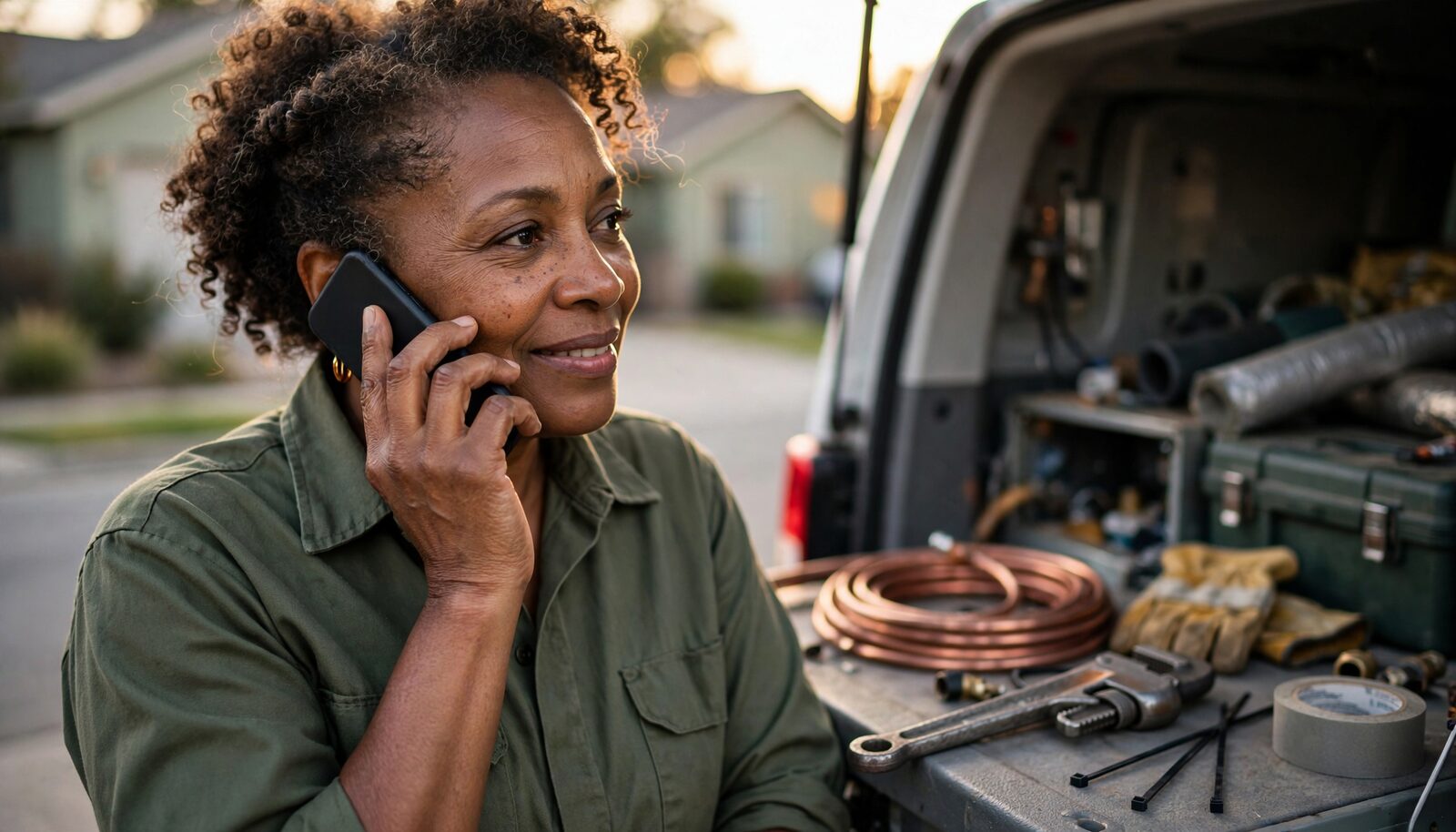
Seven in ten homeowners want a price before they call, and most HVAC websites hide it
Seventy percent of homeowners are more likely to call an HVAC company that posts its prices. Only 31% of contractors do. That gap is open for the taking.
Gift cards are a $29 billion holiday market, and your website should take its share
Shoppers planned to spend $29 billion on gift cards last holiday season. A gift card is prepaid cash and a first visit from a new customer, and both are easy to miss without a page that sells.
Your holiday season starts on your website, and this year it is 27 days long
Six in ten online holiday shoppers will start on a retailer or brand website, and Small Business Saturday lands just 27 days before Christmas. The shops that are findable first get the sale.
Proposals with e-signatures close 15% more often and 60% faster
A study of 742,137 proposals found that the ones customers can sign online close more often and faster. For trades, where quotes can sit for days, that is a cheap win.
Card fees cost merchants a record $198 billion, and your share is worth auditing
U.S. merchants paid a record $198.25 billion in card fees in 2025, triple the 2009 figure. Most of that is fixed, but the part that isn't sits on your monthly statement.
Most new hires decide whether to stay before their onboarding is even finished
86% of new hires decide how long they'll stay within six months, and a failed hire runs $25,000 to $50,000. Most small businesses never write the plan down.
Your team already has a bigger audience than your business account
Employee posts reach about eight times farther than business-account posts, and 78% of employees trust their employer over any other institution. Your crew is an unused channel.
The schedule you build in your head is costing you overtime you can't see
Automated scheduling cuts overtime costs 20 to 50%, and the DOL just recovered its biggest back-wage total since 2019. The exposure lives in the schedule you never wrote down.
Most of your estimates aren't dead. Nobody followed up on them.
80% of contractor jobs need five or more follow-ups to close. Most businesses send one, if that, and the fourth and fifth touch close over a third of the deals.
Your bookkeeping still takes a weekend a month, and it doesn't have to
Manual bookkeeping costs the average owner 10 to 20 hours a month. Even the professionals who could automate it mostly haven't. Here's the actual math.
A Google Ads click costs twice what it did a decade ago, and a bigger budget isn't the fix
A Google Ads click now averages $5.42, more than double 2016's price. Here is what the math says about paying per click versus owning your audience.
Your markup isn't your margin, and the gap is costing you thousands
A 50% markup on a job works out to a 33% margin, not 50%. That gap, plus labor hours nobody tracks, is where small business profit quietly disappears.
Almost every small business uses AI now. Almost none have built it in.
76 percent of small businesses now use AI. Only 14 percent have built it into how they operate. That gap is where the real ROI gets left on the table.
A referred customer costs eleven times less than one you paid to find
Referrals average $171 per customer. Outbound sales average $1,980. Small business acquisition costs are up 40 to 60 percent since 2023, and few owners are pricing the gap.
The testimonial you already have is your best unmade ad
97 percent of people read reviews before choosing a local business, but trust is shifting toward video. Your best testimonial might still be unrecorded, sitting on a customer's phone.
Your best piece of content should get posted more than once
70% of small business owners have repurposed a piece of content, and most call it the fastest way they've found to save time. The other 30% are still starting from zero every single post.
Your website can get you sued, and most small businesses never see it coming
ADA web accessibility lawsuits hit small businesses hardest, over 3,100 were filed in 2025 alone. The fix costs a fraction of the settlement most owners end up paying.
Recurring revenue, not more jobs, is how service businesses actually grow
Contractors who build 30% of revenue from membership plans earn 4 to 6 more margin points than the ones chasing more one-off jobs, and often sell for nearly double the multiple.
Your business listings don't agree with each other, and it's costing you the ranking
Businesses whose name, address, and phone number match everywhere they're listed rank 2.1 times higher in local search, and AI answer engines are now reading those same listings.
Your business is worth what it can do without you
Buyers and growth price the same flaw: a business that only runs because the owner is in it. Here's what the exit data says, and what to do about it.
Your customer data is scattered, and it's costing you customers
Businesses lose up to 15 hours a week chasing customer information across spreadsheets, texts, and inboxes, and every gap is a follow-up that never happens.
Your best customers will refer you, if you ask
Eighty-three percent of happy customers say they'd refer your business. Only 29 percent ever do, because nobody built the moment where someone actually asks.
Your software costs are rising, and you didn't add a single tool
Software spend rose 8% industry-wide while portfolios stayed flat, and 41% of owners felt their bill climb anyway. The leak isn't more tools, it's no one watching them.
Construction and trades are sitting out AI, and that's the opening
Construction firms pay for AI tools at barely a fifth the rate of the information sector, per JPMorgan Chase Institute data. The gap is tooling, not appetite.
The customer you didn't answer just called someone else
Six in ten calls to a small business go unanswered, and most callers never try again. An automated answering system costs less than the salary of the receptionist it would replace.
One marketing channel, done well, isn't enough anymore
The share of small businesses betting their whole marketing plan on one channel dropped from 24% to 11% since 2022. Here's what replaced it, and why it pays.
Basic cybersecurity is the cheapest insurance your business never buys
The average data breach now costs $4.99 million, and small businesses are hit hardest of all. Four unglamorous habits cut that risk more than any product you could buy.
Most small businesses aren't built to survive the growth they're expecting
A record 93% of small businesses expect to grow this year. Most are about to chase it with the same calendar and the same manual systems that got them here.
Your website is losing customers before it finishes loading
Google found the average mobile page still takes 15 seconds to load. Most visitors are gone by the third second, and the fix costs nothing but attention.
Getting paid on time is a system, not luck
Fifty-nine percent of small businesses are carrying invoices 30 or more days overdue. The fix isn't chasing harder, it's building the follow-up you don't have to remember.
Short-form video is winning, and it doesn't need to look expensive
Short-form video now delivers the highest ROI of any content format, and small businesses posting it already see sales rise. Here's how to start without a studio budget.
Your booking calendar should work the hours you don't
Forty percent of appointment bookings now happen after you've closed for the day. A phone line can't catch that demand. A booking link never clocks out.
Your Google Business Profile is a free storefront most owners leave empty
Only 35 percent of small businesses have claimed their Google Business Profile, even though 46 percent of searches now carry local intent and most conversions happen within a day.
Your customers already read every text you send
The average text message gets read within three minutes. Most small-business email doesn't. For reminders, follow-ups, and review requests, that gap is worth real revenue.
Replying to reviews is the cheapest trust a small business can buy
Nearly two-thirds of customers say a business never answered their review. The ones that do earn more from every customer who reads it.
Your email list is the highest-ROI channel you already own
Email returns $36 to $42 for every dollar spent, more than any paid channel. Most small businesses only touch it when they remember to, which is exactly the problem.
Your feed is now a storefront, not a billboard
US shoppers will spend $100 billion this year buying things they saw first in a feed. Most small businesses still post like it's a billboard, not a storefront.
Keeping customers pays more than finding them
Acquiring a new customer costs five to twenty-five times more than keeping one you already have. The research is clear. Most small businesses spend as if it isn't.
Automate the busywork before you hire for it
The first 'employee' most small businesses need isn't a person, it's a system. Here's the math on automating repetitive work before you add payroll.
The first business to reply usually wins the job
Most small businesses answer a new lead in hours or days. The research says the sale is usually decided in the first few minutes.
Why consistency beats quality on social, and how to get both
Most small businesses don't lose on social because their content is bad. They lose because they stop posting. The fix isn't more effort, it's a system.
Where AI actually earns its keep in a small business
AI won't fix a broken business, and it isn't free. But for the narrow, repetitive work that eats your week, it pays for itself fast. Here's the test.
Your website is your cheapest salesperson, if you own the audience
A website isn't a brochure. Paired with an email list you own, it's the highest-return marketing a small business has. The numbers make the case.
The math on going from manual to automated
Automation feels like a cost until you run the numbers across a year. Here's the simple framework for deciding what to systematize first.